

AC only works when driving? Discover what a slight AC cooling delay reveals about your compressor and prevent costly breakdowns. Get expert tips—read now. If you are noticing that cool air takes a few minutes to kick in at idle, or your vents blow cold only when you are on the highway, you are not alone. These are common warning signs that your air conditioning system is struggling, and in many cases the compressor is part of the story. At Wisco Automotive in Burlington, WI, we help drivers and fleets pin down the root cause before a minor delay turns into a major repair.
Why a Small Delay Matters More Than You Think
A slight delay in cooling does not always mean your AC is failing, but it does mean something is not working at its best. The AC system needs a delicate balance of pressure, airflow, and control. When the compressor is weak, when the condenser fan is not moving enough air, or when refrigerant is a little low, the system often struggles most at idle. That is why you might notice cold air after you start driving, then warm air again at stoplights. Think of it like a workout for your AC. At idle, it has less help from engine speed and natural airflow, so any small problem shows up first. Catching this early can save you money and keep you comfortable through Wisconsin summers.
What “AC Only Works When Driving” Really Means
When your AC only works when driving, your car benefits from extra airflow across the condenser at road speed. That airflow helps shed heat and lowers system pressures, which makes up for weak spots like a tired compressor, a slow condenser fan, or a small refrigerant leak. When you stop, the airflow drops and the system can no longer hold the right pressure difference. You feel warmer air from the vents until you start moving again. This pattern points to an issue that affects low speed or idle performance. Wisco Automotive sees this often, and we always start by checking the compressor, condenser fan operation, and refrigerant level to narrow it down fast.
Common Causes When AC Only Works When Driving
- Weak or worn compressor that cannot build enough pressure at idle
- Low refrigerant from a small leak that reduces cooling capacity
- Condenser fan not running or spinning too slowly
- Debris or bugs clogging the condenser fins and cutting airflow
- Condenser damage from road debris that restricts heat exchange
- Overcharged system from a DIY top-off that drives pressures too high
- Sticking expansion valve or orifice tube problems that disturb flow
- AC control valve fault on variable displacement compressors
- Cabin air filter clogged and restricting airflow through the evaporator
- Blend door or actuator issue that mixes warm air with cold
- Engine running hot, which raises underhood temperatures and AC pressures
- Compressor clutch air gap too large, causing delayed engagement at idle
How Your AC Compressor Works in Simple Terms
The compressor is the heart of the AC system. It squeezes low-pressure refrigerant vapor into a high-pressure vapor. That hot, high-pressure vapor flows through the condenser at the front of your car where it cools and turns into a liquid. Then it passes through a metering device, expands, and gets very cold before entering the evaporator inside the dash. A blower pushes cabin air across the evaporator, pulling heat and humidity out of the air you breathe. When any part of this chain falls behind, you feel it fast.
- Compressor raises refrigerant pressure and temperature
- Condenser sheds heat to outside air, refrigerant condenses to liquid
- Metering device drops pressure to create cooling effect
- Evaporator absorbs heat and moisture from cabin air
- Refrigerant cycles back to the compressor to repeat
Many modern cars use variable displacement compressors. These adjust output based on demand. If the control valve sticks or the system pressures are off, the compressor may work fine at cruise but struggle at idle. That is why a slight cooling delay can be your first clue.
Signs Your Compressor Is Getting Tired
- AC only works when driving or on the highway
- Noticeable delay before cold air after startup
- Short cycling while idling, then stable operation at speed
- Clicking or chirping from the clutch area
- Higher than normal engine load when AC switches on
- Warm air at stoplights, cold air returns as you accelerate
- Visible clutch wear or intermittent clutch engagement
Quick Checks You Can Do at Home
Before you assume the compressor is done, try a few simple checks. These can help you describe the problem to your technician and may even reveal an easy fix.
- Listen at idle for the compressor clutch clicking on and off. Does it engage and stay on, or does it flutter?
- Stand in front of the vehicle with AC on Max and engine idling. Is the condenser fan running at a steady speed?
- Check the cabin air filter. A clogged filter can make it feel like the AC is weak.
- Look through the grille. If the condenser is packed with dirt or bugs, a careful cleaning can help.
- Note vent temperatures with a simple thermometer. Track idle versus highway temps to report to your shop.
- Watch engine temperature. If the engine runs hot, AC performance will suffer.
- Avoid using sealers or random top-off cans. These can damage equipment and make repairs more expensive.
Why the Delay Shows Up First at Idle
At idle, there is less airflow across the condenser and the compressor turns more slowly. System pressures rise on the high side and drop on the low side, and the compressor has to work harder to keep up. If it is weak or the condenser fan is not doing its job, the evaporator will not get cold quickly. Once you start driving, natural ram air lowers high-side pressure and boosts performance. This is why a slight AC cooling delay is a valuable early warning. It tells you the system is close to its limits in tougher conditions.
Other Problems That Mimic a Weak Compressor
Not every delay points to a failing compressor. Here are issues we often find that create the same symptom.
- Condenser fan failure or low-speed fan control problem
- Low refrigerant charge that reduces cooling and causes cycling
- Restriction in the condenser or a partially blocked orifice tube
- Faulty expansion valve that keeps the evaporator from cooling evenly
- Blend door malfunction that mixes warm and cold air
- Evaporator icing from incorrect pressures or airflow problems
- Slipping drive belt or weak belt tensioner under AC load
- Electrical issues like poor ground, relay faults, or a weak clutch coil
Prevent Costly Breakdowns With Smart Maintenance
Good AC maintenance reduces wear on your compressor and keeps your cabin cool when you need it most.
- Keep the condenser clean. Clear bugs and debris with gentle water flow.
- Replace the cabin air filter on schedule to protect airflow.
- Inspect the serpentine belt and tensioner for cracks, glazing, or slip.
- Verify the condenser fan runs on all speeds with AC on.
- If cooling seems weak, get a professional refrigerant service. A precise recovery, vacuum, and recharge by weight ensures the correct charge.
- Add UV dye during service to spot small leaks early.
- Replace the receiver drier or accumulator whenever the system is left open for repair.
- Use the correct refrigerant type and oil. Avoid additives and sealers.
- Run your AC for a few minutes year-round to keep seals lubricated.
- Address delays or cycling issues early before the compressor overheats.
Fleet and Work Vehicles Need Extra Attention
For local businesses in and around Burlington, reliability is everything. Fleet vans and trucks often idle for long stretches, which is the toughest condition for AC. If your drivers report that the AC only works when driving, that is a red flag for high underhood heat and a possible compressor or fan issue. Wisco Automotive offers fleet maintenance that prioritizes quick diagnostics, efficient repairs, and consistent service records. We know downtime hurts, so we build schedules that keep your vehicles on the road.
How Wisco Automotive Diagnoses AC Complaints
AC diagnostics should be methodical and data-driven. At Wisco Automotive, our certified technicians follow a clear process to isolate the exact cause and protect your budget.
- Confirm the concern. We measure vent temps at idle and at road speed to reproduce the symptom.
- Scan for HVAC and powertrain codes and view live data like fan commands, pressure sensor readings, and compressor control signals.
- Inspect belts, pulleys, and the clutch engagement visually and with current draw testing.
- Check condenser fan operation and verify both low and high speeds work.
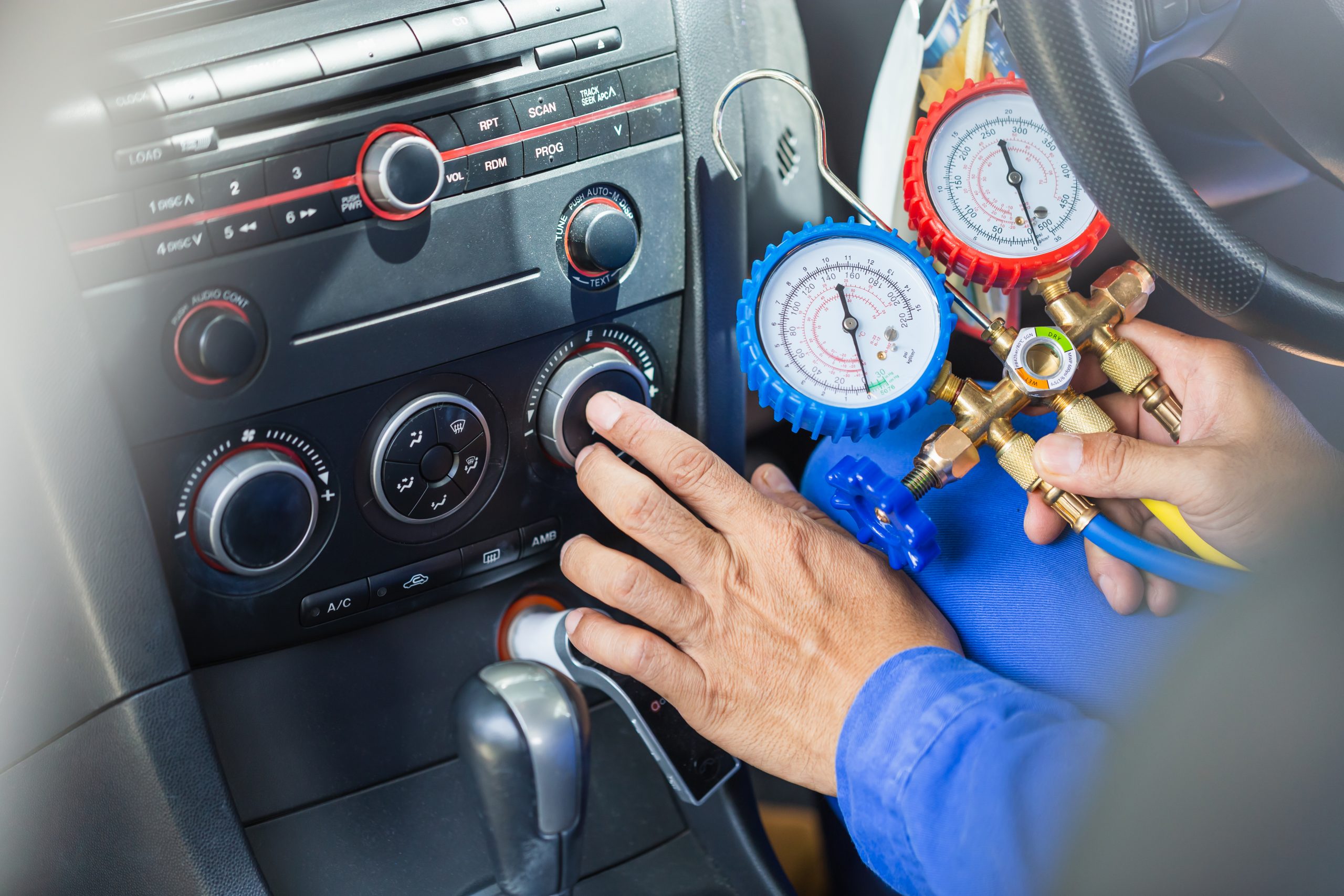
- Connect manifold gauges or read high and low side pressures through factory sensors to evaluate compressor performance.
- Recover and measure refrigerant to confirm correct charge amount, then vacuum test for moisture removal.
- Leak check using UV dye and an electronic detector, focusing on common leak points like hoses, compressor shaft seal, condenser, and service ports.
- Test the expansion valve or orifice tube for restrictions or flooding conditions.
- Evaluate blend door operation to rule out mixing of warm and cold air.
- Provide a clear, written estimate with options based on findings.
Transparent Repair Options You Can Trust
Once we find the root cause, Wisco Automotive explains every option in plain language. If a compressor is weak, we review whether a control valve service is possible on your model or if a full compressor replacement is the smart choice. We discuss replacing supporting parts like the drier and orifice tube when needed to protect your warranty. If the condenser fan is the culprit, we focus on restoring proper airflow. If the refrigerant charge is off, we recharge to spec and verify performance. We work to your goals and budget, and we never move forward without your approval.
Real-World Scenarios We See in Burlington, WI
- SUV with AC only works when driving. Cause: failed low-speed fan relay. Fix: replace relay and verify fan speeds. Result: cold air at idle and on the move.
- Slight AC cooling delay in a sedan. Cause: low refrigerant from a condenser seam leak. Fix: replace condenser, recharge precisely, add UV dye. Result: fast cool down and stable operation.
- Van with intermittent cooling at idle. Cause: compressor clutch air gap out of spec. Fix: adjust or replace clutch assembly. Result: reliable engagement and cold air at stoplights.
- Pickup with variable displacement compressor. Cause: stuck control valve. Fix: replace valve, verify pressures. Result: strong cooling at idle and highway speeds.
- Family car with weak airflow complaint. Cause: clogged cabin filter and debris on the condenser. Fix: new filter and thorough cleaning. Result: better airflow and colder vents.
When to Stop Driving and Call for Help
Most AC issues are not emergencies, but there are times to play it safe. If the AC stops working and you also notice engine overheating, burning smells, smoke, or loud belt squeal, pull over. A seized compressor or slipping belt can lead to bigger problems. Wisco Automotive provides towing and roadside assistance for lockouts, jumpstarts, flat tires, and vehicle towing. If you are unsure, call us and we can advise you on the next step.
FAQ: Fast Answers About Delayed Cooling and Compressors
- Is it safe to drive if my AC only works when driving? Usually yes, but have it checked soon. It often means your compressor or condenser fan needs attention.
- Can a DIY recharge fix a slight AC cooling delay? Sometimes a correct charge helps, but overcharging with a can often makes it worse. Professional service is best.
- How long does an AC diagnostic take at Wisco Automotive? Most tests take about an hour. Complex leaks or intermittent faults may take longer.
- Will fixing my AC help fuel economy? Yes. A healthy system runs more efficiently, which can reduce engine load and improve comfort.
- Do both radiator fans need to run with the AC on? Many vehicles use multi-speed fans. At least one fan should run with AC at idle. If it does not, cooling will suffer.
- How often should I service my AC? There is no fixed schedule, but if cooling changes, have it checked. Regular inspections during oil changes help catch issues early.
Why Choose Wisco Automotive for AC Service
Wisco Automotive is your local AC specialist and full-service shop at 496 S. Pine St., Burlington, WI. We handle everything from diagnostics and repairs to preventive maintenance for both personal and fleet vehicles. Our team works with major tire brands, installs remote starts and backup cameras, and is certified for ignition interlock device installations with Intoxalock, LifeSafer, and Smart Start. That means you get a one-stop solution that respects your time and budget. We are known for certified, efficient, and high-quality service, and we stand behind our work. If your ac only works when driving or you have noticed a slight AC cooling delay, we are ready to help.
Your Next Step: Get Comfortable Again
If your AC only works when driving or you feel a delay at idle, do not wait for a heat wave. Call Wisco Automotive at 262-716-0062, visit wiscoautomotive.com, or stop by 496 S. Pine St., Burlington, WI. We are open Monday through Friday from 8 AM to 5 PM and Saturday from 8 AM to 12 PM. We will diagnose the issue, explain your options, and get you back to cool, reliable comfort quickly. Whether you manage a fleet or drive one car, our team will treat you right, keep you informed, and make sure the fix lasts. Schedule your AC check today and enjoy the drive again.